INTRODUCING

Christina Leslie's Portraits

N.L.S., A New Local Space

Deborah Caroll Anzinger's artist run residency and exhibition space in Kingston

ON THE SCENE

Leasho Johnson's Provocative Re-interpretation in 'Canopy Guild'

Light Sensitive

Marlon James' black and whites

Annalee Davis: ON THE MAP

Caribbean Political Documentary

Showing posts with label Jamaican art. Show all posts

Monday, June 25, 2012

Tokyo Story: Creative Culture in the City

The last part in an interview with Marcus Bird about his fascination with Tokyo and its creative life. He has spoken about his ideas about lifestyle branding and art activities he participated in while living there. This time he speaks about the multitude of influences and visual stimulation. From Harajuku to Shibuya to Vuitton and being out there. His words out remind me of a documentary Pharrell Williams did last year called Tokyo Rising.
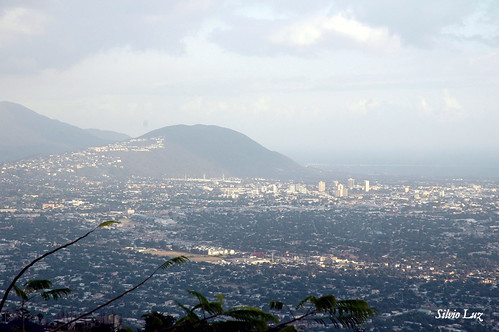
Tokyo at night, Below Jamaican Kingston dayscape courtesy of Silvio Luz


Kingston - Jamaica


You taught yourself design and have worked in design in Tokyo, what is the creative culture like in Tokyo and what future plans do you have for your creativity?

Oh man can I talk about this for days! A real creative culture to me is one with enough people actively doing stuff that can inspire other people and also give people an idea of how far they can reach in whatever field they are trying to break into. Over thirty six million people live in Tokyo, so that’s a lot of artists, architects, singers, sculptors, painters and graphic designers. In Tokyo I was able to see art that I haven’t seen anywhere else in the world (except maybe Berlin) and there is a sense of a creative “pulse” in certain areas. In Omotesando you can see the uber-upscale but wonderfully creative ideas used in the high end stores like Louis Vuitton and Burberry, and then a few blocks away you see some really awesome shirts, shoes or accessories stores in Harajuku. But its not just that. Lots of people in Tokyo experiment with different kinds of fashion, so the regular way of dressing and what I call “thinking modes of creativity” are more acceptable. So if I want to wear spinach green boots and skinny jeans with my character shirts on, I don’t feel like I’m going “out there” with it. I love that feeling; where you can step out of your apartment in a crazy getup, or walk with the knowledge that you have access not only to creative works, but a creative mindset. Plus, in such a densely populated city, advertising is different. Stores use more art and media to grab your attention, buses and taxies have a bit more colour and attention to detail. It’s like as you breathe creatively, the city breathes too.
Kingston is much, much smaller and much, much, more chill and the art you see around naturally reflects that. It’s very “folky” if that’s a word. You’lll see lots of landscapes and scenes from the country and portraits of women with baskets on their heads. You’ll see stuff with beaches and rivers and canoes. That stuff is great, but it doesn’t make my mind get buzzing. My mind isn’t flooded with stimulation the way it is in Tokyo. It might seem obvious that It reflects island life and that’s cool, but you wouldn't’ get the same stimulation in a city with skyscrapers and high-speed trains.


Don’t get me wrong, Jamaicans are ridiculously creative people, but I don’t think we’ve embraced our prodigious talents much in the area of the arts. I even wrote about this recently in a local paper, asking “Where is Kingston Harajuku”? Because we don’t really have an art district in Kingston. That’s what I mean when I said in Tokyo you can “see where creativity can take you”.
I wasn’t working creatively on a full-time basis in Tokyo, and I was completely fascinated by the idea of having a constant creative purpose in such an awesome city, or a city of a similar size. There were days it blew my mind just to even be in Tokyo, because years before I had off-handedly said to myself “I’d love to launch my clothing at some point in Tokyo, or live in Tokyo”. But my will was definitely tested there. My Japanese was moderate but not super fluent, and on top of hustling with photography, odd little “baito-batio” (part-time work) it left me with little energy and often little motivation. But back to my original point about the things you see around you, this is what would make me get up in the morning and still try. I would walk around and see some cool photography at a gallery somewhere, or visit  some bizarre exhibition in Shibuya, or see some amazing advertising artwork in the subway, or I’d go to to some odd shop in Mid-town. All these places would remind me that the shops, the items, the advertising, everything was created by “out there” creative thinkers. So even if my motivation was low, I could “plug in” to a lot of art in a lot of places and be reminded that creativity can actually take you somewhere. So I’d love to be doing a project with my work, or media in Tokyo that I’m doing all day, everyday.

I don’t like comparing places really, but Jamaica doesn't have that sort of creative pulse, mostly I believe because there are only 2.6 million people in Jamaica and Jamaican art is a little different. If you checkout the average Jamaican gallery, there are tons of landscapes and scenes from the country. It reflects island life and that’s cool, but you wouldn't’ get the same stimulation in a city with skyscrapers and high-speed trains.


Where do you think the creative pulse is in Jamaica and other Caribbean countries?


Watch Tokyo Rising here:

Thursday, March 26, 2009

National Biennial 2008: Ebony G. Patterson

http://www.blogger.com/img/blank.gif
Watch Petrine Archer-Straw's interview with Ebony Patterson

Interview by Nikki-Ann Chambers

What inspired you to do this piece?
The kind of hypocrisy that is evident in our Jamaican culture. We “bun out” “batty man” which is seen as a kind of feminist thing yet the real men and the “ganstas” dress better than women, wear questionable women clothes, bleach [which used to be a woman ting] and pretty up more than most women today. However the work is not about homosexuality but an exploration of a shift in masculity , and the contradictions of what was once the anti-mocho. The feminity is now reshaping the masculine

How do you see this room and what is the story of this room?

I Use and see the room as a faux feminine, really questioning what masculinity is, our ideas about beauty and the grotesque and how that all ties in with stereotypes and our perceptions, a culture and a people.

What relation do the tampons have to the general piece?

I refer to them as the “pussy bulletz” and I wanted to use something that was obviously feminine to juxtapose with the homosexual serotypes that I created with these photographic images. What is really interesting is the shape of the tampons and how they resemble and echo the shape of a bullet.

What relation do the men have within the piece?
I use young men within a particular age group as they represent a demographic involved in the practice. Unlike persons in the the 1990’s that did this for social mobility , these young men are not bleaching and going up-town in suites to look for jobs. They are on the corners and getting involved inillegitimate activities but at the same time it seems that a faux feminine that is beginning to immerge from their appearance. This juxtapose with objects that are obliviously feminine and liking that to “gansta culture,” an aspiration and gratification of the “gansta”.

Does the colour of the wall plays a divider or a link between what is masculine and what is feminine?
Red can be seen as a neutral colour of the sexes. I chose it and if u realize is not “red red” but more of a pinkish red. I did this to play on the whole concept of how the men are bordering the line between masculinity and femininity.

-The original post has been edited to accommodate requests by the artist, Ebony G. Patterson

Tuesday, May 20, 2008

Curator's Eye 3: The newness and nowness of our cultural past


The Curator's Eye III opened at the National Gallery of Jamaica on April 27, 2008. The show comes around every two years and provides a thesis about contemporary Jamaican art propsed by an internationally invited curator. The curators invited in the past have been Lower Stokes Sims and Eddie Chambers. This year Keith Morrison of the Tyler School of Art was invited. From September 2007, artists were invited to share in Morrison's vision for this show- Ceremony in Space, Time and Sound. The National Gallery's press release lists the artists exhibiting as:
'LOCAL ARTISTS: Cleve Bowen, Carol Campbell, Carol Crichton, Paula Daley, Andy Jefferson, Ras Kassa, O'Neil Lawrence, Khepera Oluyia Hatshepwa and Oneika Russell.
INTERNATIONAL ARTISTS:Albert Chong, Michelle Eistrup, Lawrence Graham-Brown, Ebony G. Patterson and Tal Rickards'

Artists were encouraged to create fresh work in multimedia thus resulting in a numerous new pieces involving video, photography digital prints being exhibited. It will be interesting to see whether this show has opened a path for more Jamaican artists to exhibit work which delves into the sphere of video and digital media. If this is the case then such a show would then become a part of the nation's history of art-making. The curator has sought to extend this concept into the documentation of the show as he seeks to utilise digital media to market the show and its proposal of contemporary Jamaican art. To reimagine ceremony, which usually reminds me of ritual, ancestry, spirituality, history and pre-modern analogue practice, in a digital realm certainly promises something edgy in our cultural landscape.


The notion of 'Ceremony' was evidently interpreted in diverse ways. Artists perhaps used this plunge into new working methods to tackle more confrontational subject matter. Bleached ivory faces on black bodies, burned domestic interiors evoking acts of violence, figures sculpted in the gestures of Afro-Christian religions were just a few of the works exhibited. As I will not be on-site to see this show I invite you to read the curator's ideas and give us feedback on issues such as the timeliness of the exhibition, its approach to Jamaican art, relationship to past curator's eye exhibitions, the value of the distinguishing between local and international artists in a show reflecting on 'Jamaican Art', your notion of 'Ceremony' and its relevance in Jamaican culture etc.


Excerpts from the curator's exhibition write-up follow:
'The Curator’s Eye III consists of art by 15 artists, four of whom live abroad. I call the exhibition “Ceremony in Space, Time and Sound” because the media the artists use involve dimensions that extend forms of visual forms of art. The exhibition involves film, TV and video projections, room installations, interactive art, along with paintings, photographs; prints and sculptures. It is an exhibition with a variety of ceremonial themes to be found in Jamaican art, reflecting a dynamism from which Jamaica takes its cultural character and a source of a continuum from the cultures of ancient Africa to our time. Of course, not all Jamaicans are descendants of slaves or of Africans. Jamaicans are Black, White, Maroon, Chinese, Indian, Jewish, Arab, and just about all others. However, as is commonly known, and as The Curator’s Eye III further substantiates, the cultural originality of the country is strongly affected by Africa and practices evolved from the days of slavery.'
--- Keith Morrison

The following three paragraphs are on walls in the galleries of the Curator’s Eye III

“… it appears to me that the seeds for inclusion in Jamaican art lies in of some of the authentic ideas that characterize the country, such as ceremonial practices, religious or secular rituals, dancehalls, and street life, are probably best cultivated through the populist iconography of new media. “Populist” because its signs, symbols, metaphors, and narrative are commonly known; and the visual language of the art is vernacular. And in the case of electronic media, the art is also populist because it may be shared by a wider segment of the population than rational art, since the cost to own or reproduce it (copying DVD, CD, and video, or internet access) is negligible.”
--- Keith Morrison

‘Originality in art is not how well artists emulate standards set by other cultures (e.g., Europe or the US), but how well they bring new ideas to the fore. Originality is the basis for cultural distinction, without which one is merely a follower, a footnote to the legacy of others. Originality, which comes from new idea, is needed before art can be made. New idea is the foundation of originality. In my opinion, without originality there is no art. Refinement of existing art ideas may be fascinating virtuosity, attained by the very few with superior skill, may be entertaining and enjoyable, but that by itself is what I would call more technical finesse than art. Originality by itself may not be art, but all true art I have seen includes originality. Original art is art that is potentially important. And importance is the criterion for change or influence on the art world at large. Jamaica is ripe with original ideas that may make new and important world-class art. These ideas are to be found in Jamaica’s spiritual and religious practices, its legacy from slavery, its multilayer ethnicity, Jamaican style, music, language, and attitude.”
- Keith Morrison

“But often the best art is strident, even offensive, as it rubs against the grain to reveal complex and contradictory truths of the society it serves. So it is in contemporary Jamaica. And so perhaps the nucleus of originality of contemporary art in Jamaica is in the imagery of sex and gangsta in the Dancehall culture, which takes impetus from the mores of the slums of Kingston and flaunted as phallic shoot-outs in spotlights that defy perceived middleclass denial and suppression, as explored in this exhibition by several artists. But if the slum and Dancehall culture form the prominent contemporary paradigm for Jamaican art, it shares the stage with some other sources from which it springs, as seen in the work of other artists in the show, whose ideas harkening back to ancient Africa, through slavery, festivals, rituals, ceremonies and the urban popular culture. Jamaican artist are expressing a richly layered aesthetic as revealed in the work if these 14 artists. Jamaican artists stand to become world-class leaders through exploring the originality of their culture with its multiethnic racial and ethnic experiences, unique religious diversity and profound ceremonial practices. If The Curator’s Eye III is any indication, the future of art by Jamaicans could be internationally outstanding.”
--- Keith Morrison
In order of apperance, the images show the work of Oneil Lawrence, Michelle Eistrup, Ras Kassa, Ebony Patterson and Lawrence Graham-Brown. Images contributed by Susan Alunan

Saturday, January 5, 2008

Materialising Slavery: Art, Artefact Memory and Identity


Images taken of the current exhibition at the Institute of Jamaica

The opening of the exhibition Materialising Slavery: Art, Artefact Memory and Identity was very well attended on Thursday, December 13, at 3 pm. Wayne Modest set the stage with the historical background of our Nation and the context within which each representing artist and ambassador leads. The exhibiting artists are David Boxer, Lawrence Graham-Brown, Christopher Irons, Khalfani Ra and Oneika Russell.

Though exhibited within fragmented spaces, the consistent threads that tied the exhibition together as a powerful forward movement shared by more established artists and the younger generation set examples for us all, as we celebrate the mark the 200th anniversary of the abolition of the Trans-Atlantic Trade of enslaved Africans to Jamaica.

The theory of existentialism, very simular to that of the chaos vs. symmetry theory were also clearly at work throughout the exhibition. Chattel slavery was clearly an injustice served against our Jamaican people in the context of our connection to Africa, the Black Diaspora, to Black people and to humanity in general. In this context, existentially, our ancestors have already bourn enough pain, suffering and anguish in our honour, this being a past purpose. If we refuse to view the world as being chaotic, there is always symmetry in the greater view of humanity. Every thing does in fact serve a purpose, one to learn from and add to our everyday rituals of "living good with people".

In locating ourselves in the present day and in an attempt to set a new paradigm, we need not necessarily re-live this pain and suffering. It is a much more suitable position to identify ourselves with the fact that those wounds have already been healed. We, the descendants, therefore are “Free” of these issues. The contemporary issues that our history continues to prove relevant are issues of identity, race, gender and the body.

It all came together in the new galleries of the Institute of Jamaica, 95-97 Water Lane (entrance at #10 East Street). This exhibition is part of the collaborative project Materialising Slavery: Art, Artefact Memory and Identity being put on by the Museums of History and Ethnography and the National Gallery of Jamaica.

I cannot possibly reflect to you what experiencing this installation of fine artists is like, please visit the site in person. All were and continue to be invited to play a significant part in this exhibition.

The exhibition closes in March 2008.

contributed by Tricia Gordon-Johnston

Tuesday, August 28, 2007

UPGRADED SUMMER EXHIBITIONS


Having seen two of the major juried shows this summer, the JCDC Fine Arts Festival and the Under 40, it is obvious that a handful of curators and arts administrators are really trying to reposition Jamaican art internationally by improving exhibition standards prevent the formation of a status quo and give it a swift jumpstart. The guest speaker at the opening of The SuperPlus Under 40 Artist of the Year Exhibition, Taynia Nethersole spoke of defending the reputation of Jamaican contemporary art. She mentioned the declaration of one collector in stating that art in Jamaica was stagnating. Imagine that. A breakaway from convention and focus on experimentation and cultural exploration as seen in the works of young artists such as Cleve Bowen, Kereina Changfatt, Paula Daley and Oya Tyehimba, being declared stagnant. Being a young artist myself that statement is a bit of a slap in the face signalling the loss of the faith in young artists that collectors of previous generations had. This is reconfirmed by one of Jamaica’s most prolific collectors, Wallace Campbell, in a recent interview stating that he rarely collected work from young artists however promising. Is this possibly why so few contemporary artists are barely able to earn a minimum from their work or curated contemporary art shows such as the Curator’s Eye receives a scanty amount of visitors or contemporary artists have to prove commercial viability before being able to book a show at top commercial galleries. Quite possibly, and it is a fact the art community has to live with and I suppose somehow we all get on with it. This resilience carries forth in the work that is out there in the galleries such as The Mutual Gallery and the The CAGE Gallery; the continued encouragement and growing quality of art coming from youth artists, self-taughts and art students by the Jamaica Development of Culture Commission.

I must say however that great encouragement comes from the publication of a very well designed and edited volume of The Jamaican entitled classically, ‘The Art Issue’. If my memory is right, it is the only publication to cover so wide a span of Jamaican art in a few years. It may be a bit pricy for the average student or struggling artist but is well worth it at a price of $850. It could just as well be entitled ‘The Intuitive Art Issue’ or ‘The National Gallery Companion’ as it does give the most space to a timeline similar to the curatorial schema of the National Gallery’s permanent collection and the idea of the Intuitive artist. The general avoidance of new directions in our contemporary art, concerns me a bit. I would have loved to have seen a bit more about artists working with printmaking, assemblage, video, photography. fibre arts, performance, drawing etc. Later in the volume however,features on Christopher Clare, who peeked our interest in The National Gallery’s, Curator’s Eye II and Laura Facey’s under-publicized Institute of Jamaica show were included.

Before closing, I am mentioning an item on my Christmas list for the Jamaican art scene: the renaming of the SuperPlus Under 40 Artist of the Year Exhibition/Competiton. Since it is modelled on the Turner Prize, which has since evolved into a brand partially because of its name which is now comparable to the Oscars and Tony’s, why not employ some of its publicity generating strategies. A brand-worthy name is priceless as evidenced by The Art Issue.

Note: For artists who are not yet aware the National Biennial’s Juried section has been merged with the JCDC Fine Arts Festival so next summer presents an opportunity to enter work once more when the JCDC sends a call to artists.
Also remember to see the Under 40 show at the Mutual Gallery and vote for your favourite body of work. Their artists talk is Tuesday August 28th, 2007 at 6pm.

Because I am sure I have stepped on toes feel free to voice your opinion by posting your comments.

Link to a related article in The Sunday Gleaner:
http://www.jamaica-gleaner.com/gleaner/20070826/arts/arts1.html

Tuesday, April 17, 2007

New Media in Jamaican Art

What is new media, and how do you feel it can be used by Jamaican artists? What cultural interventions can occur through its use? Is it only for an elite set of privelaged techno-freaks? Does it deviate or dilute Fine Art or can it be used to assist the artistic process? Does it feel like a European or American import that is trendy at the moment or could there be more potential than we give it credit for? Should the artist using new media look to other mediums such as Painitng and Film to create value and determine aesthetics or does it require its own approach?

You are invited to discuss the above questions and raise your own.

Tuesday, February 13, 2007

Biennial 07: Invitation to Discuss

This biennial is a particularly important exhibition for various reasons. It stands out as being one of the first years where on can think of a set of artists being shown who utilise digital media and processes. Renee Cox, controversial New York-based artist is exhibiting several photographs and students from Edna Manley College are exhibiting alongside seasoned practitioners. There are many more questions that could be asked and discussed in response to the Biennial and I invite you to do so here. It is remarkable also that I have not seen as much publicity for such an immense exhibition. Which artists stood out for you? What does a show like this say about Jamaican culture and its industries? How does this show affect audiences? etc.

Friday, January 26, 2007

Travelling Exhibitions and National Art:


At present there seems to be a shortage of travelling exhibitions in Jamaica. For reasons perhaps such as budget restrictions and shortage of the kind of space required before being allowed to host one of these exhibitions. This does something however: it keeps the gallery circuit and the art community closed. The National Gallery with its Biennial and Curator's Eye seeks to invite international curator's and artists to exhibit alongside local artists but the context seems to be innately about Jamaica and its cultural output, from the diaspora or not. Somehow leading to a kind of nationalism in art. It is true that this is one of the main roles of national art museums and galleries but what of privately run galleries?

On the other hand, if you think about the UK and its Young British Artists promotional strategies, the U.S. and its National Endowment for the Arts and Canada and its National Film Board, it seems that the national voice in art is a common policy or strategy. How does this sit with the idea of crossing boundaries and merging of cultures that is popular with theorists today. How can the Jamaican art community find a middle ground or is it a matter of government policy?

There is also the issue that I am even referring to art produced by persons culturally, geographically or historically associated with Jamaica as 'Jamaican' art. Is that valid to even search for the 'Jamaican' element in the equation?

Wednesday, December 20, 2006

Launch of new art forum

Welcome to the launch of the new art forum for Jamaican art. This blog is dedicated to the open and honest discussion about the arts in Jamaica. Over the next 6 months topics will be raised and hopefully a useful discussion will be generated by all interested persons. We will also post reviews of shows and events contributed by the public. This blog was created as an alternate to the tightly controlled arts media in Jamaica. Please send submissions to the above email address. Keep checking for postings and your participation is greatly anticipated.
