Last Summer, while walking in a little off-road in Kyoto's city centre, I saw this window display.
Arrangement of clothes hanging in the window display
Arrangement of objects at the bottom of the window display
I couldn't really believe it was a shop until checking that it did have a
sign on the door and a few racks of clothes. In that
street, which is next to a temple and a very quiet upscale part of the
commercial district of quaint Kyoto, the store was just believable
enough. It demonstrated several differences in approach to commercial
design and aesthetic taste of the Caribbean. Our stores in the Caribbean are more direct and definitely colourful. They invite you to think
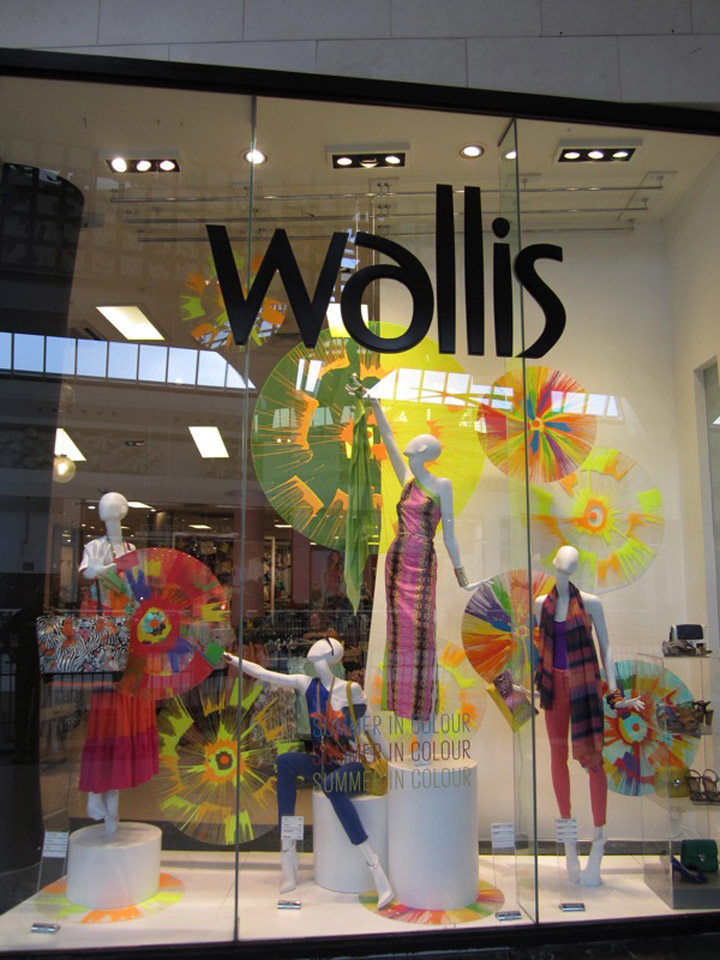
about lifestyle and entertainment for example. Upscale UK and North American stores tend to have a very grand, opulent use of display space to trigger desire in customers. The display for UK store, Wallis for
eg. shows the mannequins clothed in the wares of the franchise and other
props to convey summery activities.
Window displays similar to those seen in the Caribbean
Display Design of Diesel's flagship store
In comparison, the display for "Urim" pictured below projects the
zen-like, less is more, simple aesthetic Kyoto is famous for. It is not
clear whether this store actually sells to the public or has private
clientele or only serves as a space for aesthetic play. It is
interesting to look at how arrangement and colour of natural elements
and the goods in the store can be used as a another approach to design
rather than large colorful, synthetic graphics. These are two approaches
to bringing attention to the story of the brand.
Sign at the entrance of small store on Teramachi-dori, Kyoto
This is not to say that Kyoto doesn't have its fare share of large department stores like Louis Vuitton and Lacoste showing very eye-catching work. Vuitton has long been known for its collaboration with popular local artists such as Yayoi Kusama and Takeshi Murakami but this style of pared down hand-made visuals is more typical of smaller stores off the main roads.
What do you think is communicated by each approach? Do you think this minimal aesthetic has a place in Caribbean design?
The last part in an interview with Marcus Bird about his fascination with Tokyo and its creative life. He has spoken about his ideas about lifestyle branding and art activities he participated in while living there. This time he speaks about the multitude of influences and visual stimulation. From Harajuku to Shibuya to Vuitton and being out there. His words out remind me of a documentary Pharrell Williams did last year called Tokyo Rising.
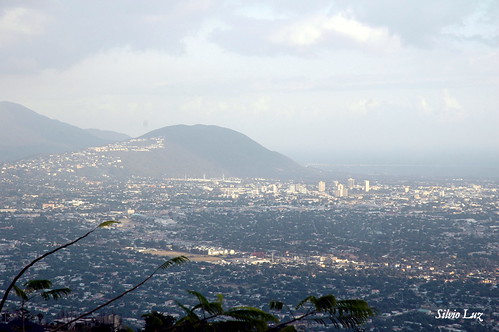
Tokyo at night, Below Jamaican Kingston dayscape courtesy of Silvio Luz
You taught yourself design and have worked in design in Tokyo, what is the creative culture like in Tokyo and what future plans do you have for your creativity?
Oh man can I talk about this for days! A real creative culture to me is one with enough people actively doing stuff that can inspire other people and also give people an idea of how far they can reach in whatever field they are trying to break into. Over thirty six million people live in Tokyo, so that’s a lot of artists, architects, singers, sculptors, painters and graphic designers. In Tokyo I was able to see art that I haven’t seen anywhere else in the world (except maybe Berlin) and there is a sense of a creative “pulse” in certain areas. In Omotesando you can see the uber-upscale but wonderfully creative ideas used in the high end stores like Louis Vuitton and Burberry, and then a few blocks away you see some really awesome shirts, shoes or accessories stores in Harajuku. But its not just that. Lots of people in Tokyo experiment with different kinds of fashion, so the regular way of dressing and what I call “thinking modes of creativity” are more acceptable. So if I want to wear spinach green boots and skinny jeans with my character shirts on, I don’t feel like I’m going “out there” with it. I love that feeling; where you can step out of your apartment in a crazy getup, or walk with the knowledge that you have access not only to creative works, but a creative mindset. Plus, in such a densely populated city, advertising is different. Stores use more art and media to grab your attention, buses and taxies have a bit more colour and attention to detail. It’s like as you breathe creatively, the city breathes too.
Kingston is much, much smaller and much, much, more chill and the art you see around naturally reflects that. It’s very “folky” if that’s a word. You’lll see lots of landscapes and scenes from the country and portraits of women with baskets on their heads. You’ll see stuff with beaches and rivers and canoes. That stuff is great, but it doesn’t make my mind get buzzing. My mind isn’t flooded with stimulation the way it is in Tokyo.It might seem obvious that It reflects island life and that’s cool, but you wouldn't’ get the same stimulation in a city with skyscrapers and high-speed trains.
Don’t get me wrong, Jamaicans are ridiculously creative people, but I don’t think we’ve embraced our prodigious talents much in the area of the arts. I even wrote about this recently in a local paper, asking “Where is Kingston Harajuku”? Because we don’t really have an art district in Kingston. That’s what I mean when I said in Tokyo you can “see where creativity can take you”.
I wasn’t working creatively on a full-time basis in Tokyo, and I was completely fascinated by the idea of having a constant creative purpose in such an awesome city, or a city of a similar size. There were days it blew my mind just to even be in Tokyo, because years before I had off-handedly said to myself “I’d love to launch my clothing at some point in Tokyo, or live in Tokyo”. But my will was definitely tested there. My Japanese was moderate but not super fluent, and on top of hustling with photography, odd little “baito-batio” (part-time work) it left me with little energy and often little motivation. But back to my original point about the things you see around you, this is what would make me get up in the morning and still try. I would walk around and see some cool photography at a gallery somewhere, or visit some bizarre exhibition in Shibuya, or see some amazing advertising artwork in the subway, or I’d go to to some odd shop in Mid-town. All these places would remind me that the shops, the items, the advertising, everything was created by “out there” creative thinkers. So even if my motivation was low, I could “plug in” to a lot of art in a lot of places and be reminded that creativity can actually take you somewhere. So I’d love to be doing a project with my work, or media in Tokyo that I’m doing all day, everyday.
I don’t like comparing places really, but Jamaica doesn't have that sort of creative pulse, mostly I believe because there are only 2.6 million people in Jamaica and Jamaican art is a little different. If you checkout the average Jamaican gallery, there are tons of landscapes and scenes from the country. It reflects island life and that’s cool, but you wouldn't’ get the same stimulation in a city with skyscrapers and high-speed trains.
Where do you think the creative pulse is in Jamaica and other Caribbean countries?
ART:Jamaica is closing out. This site has been edited and written mostly by practicing visual artist & lecturer, Oneika Russell, since 2006. There are a couple of projects that will be keeping me busy for a while. Thanks for your support and I will continue to maintain our Facebook group and page however. For further inquiry, reach me at Oneika Russell on Facebook or @oneikarussell on Instagram and Twitter.






 Posts



